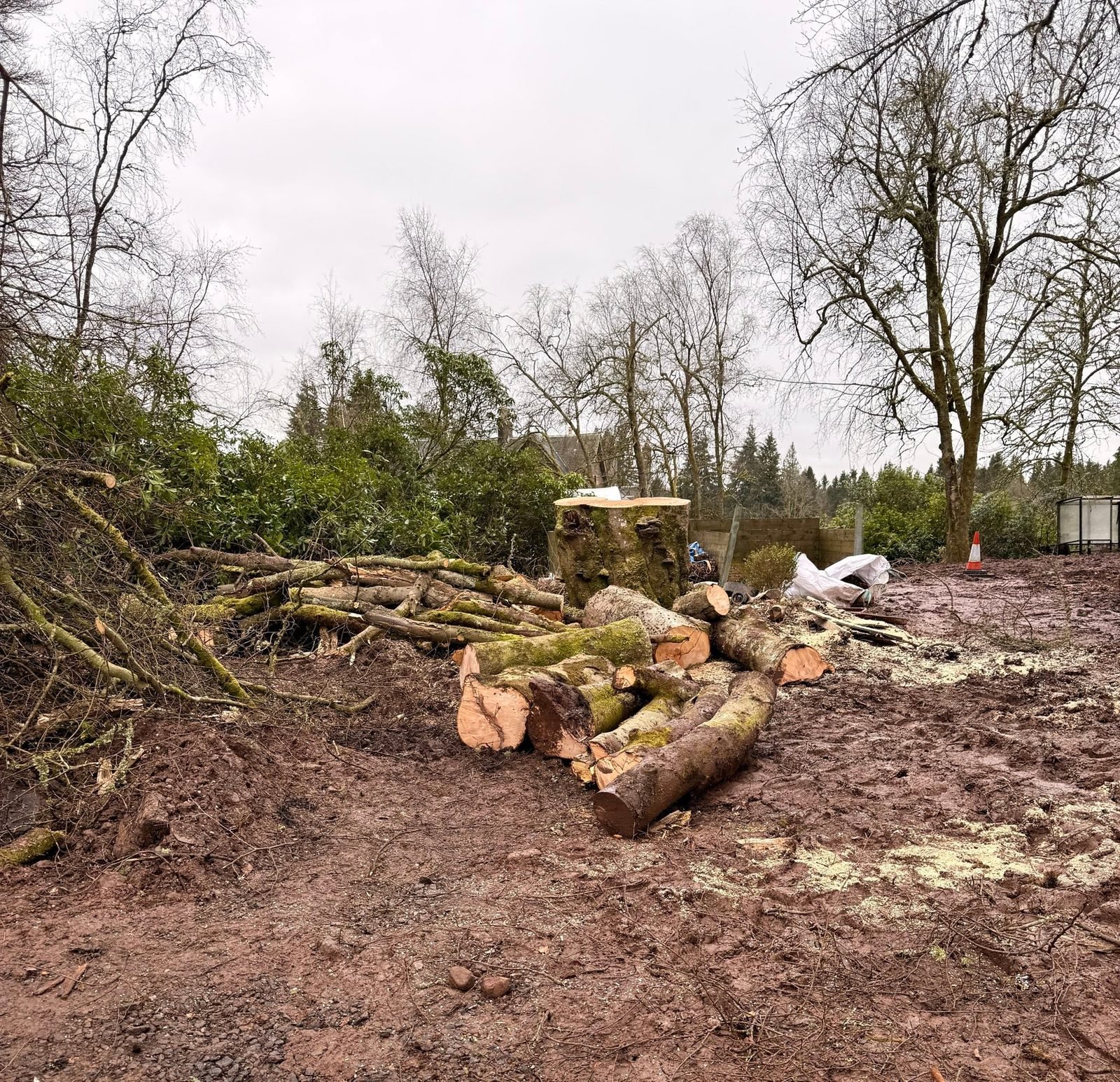
We removed this decayed tree in Dunblane after it was found to be structurally compromised, even though it looked fairly normal from the outside. Bracket fungi along the stem, decay through the heart of the wood and ground works that had disturbed its roots added up to a tree far more vulnerable to failure, especially in high winds, so we dismantled it in sections and cleared the site.
Three things together had left this tree structurally compromised:
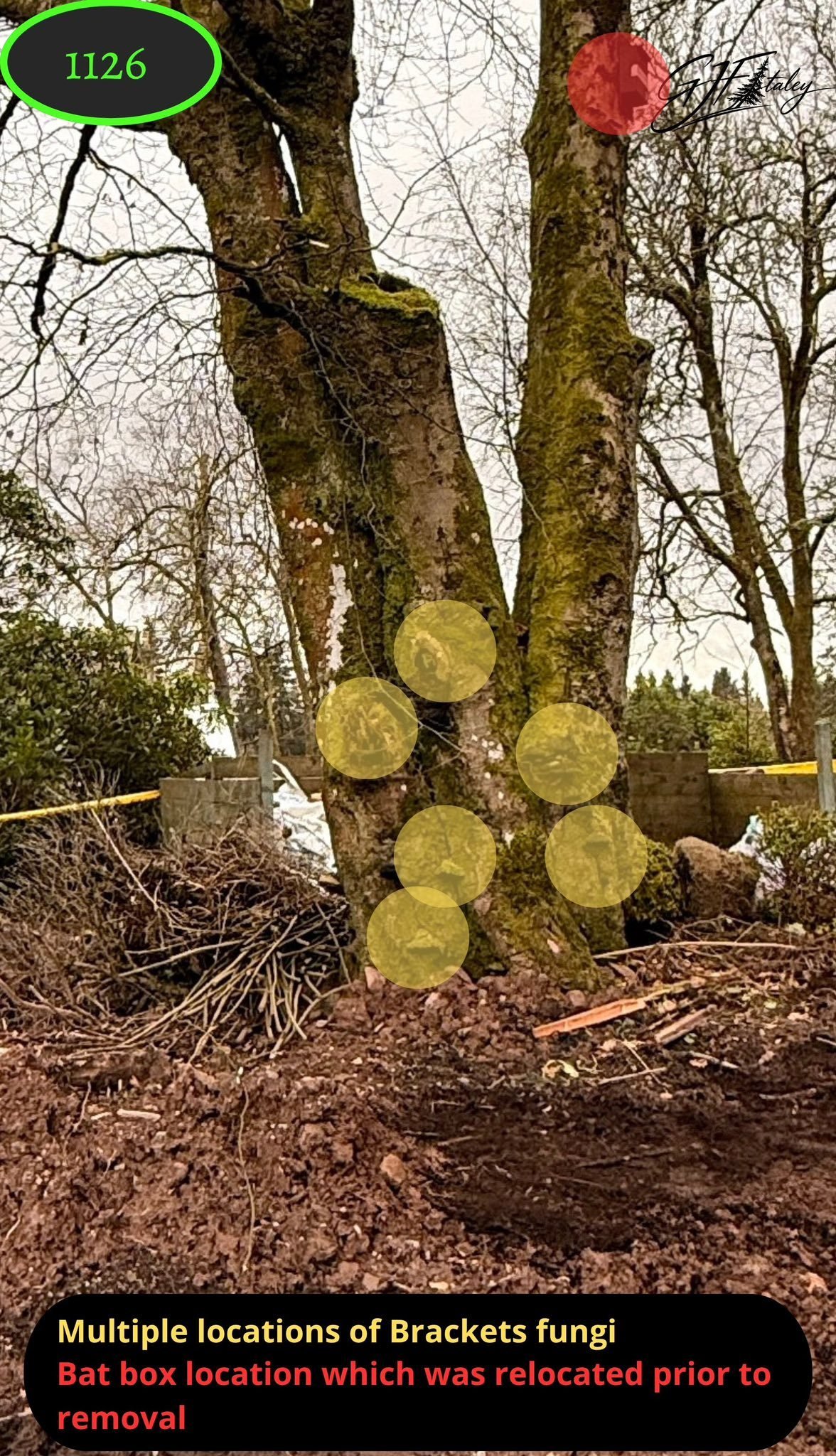
Bracket fungi in several places along the stem
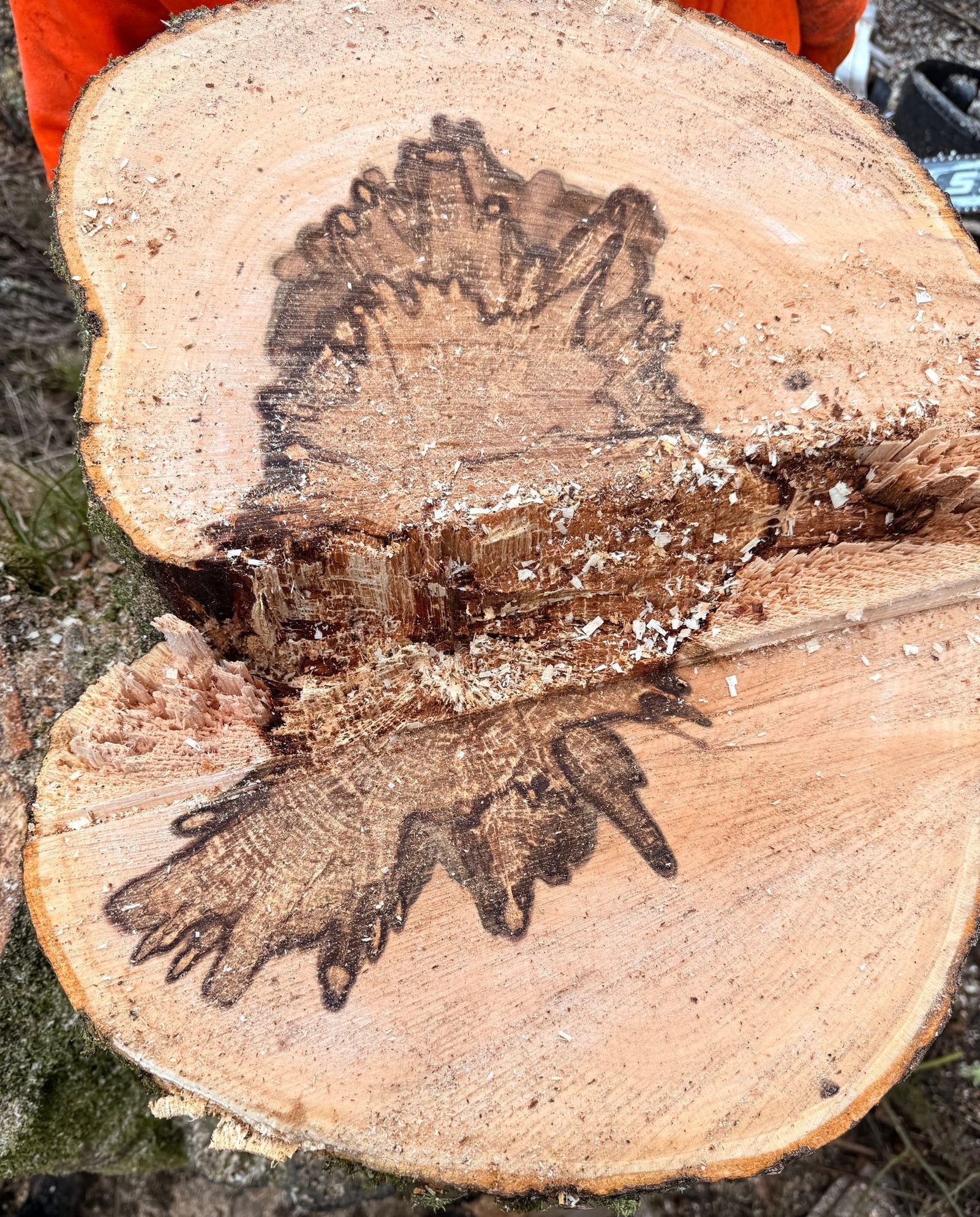
Internal decay that had reduced the strength of the stem, clear once it was sectioned
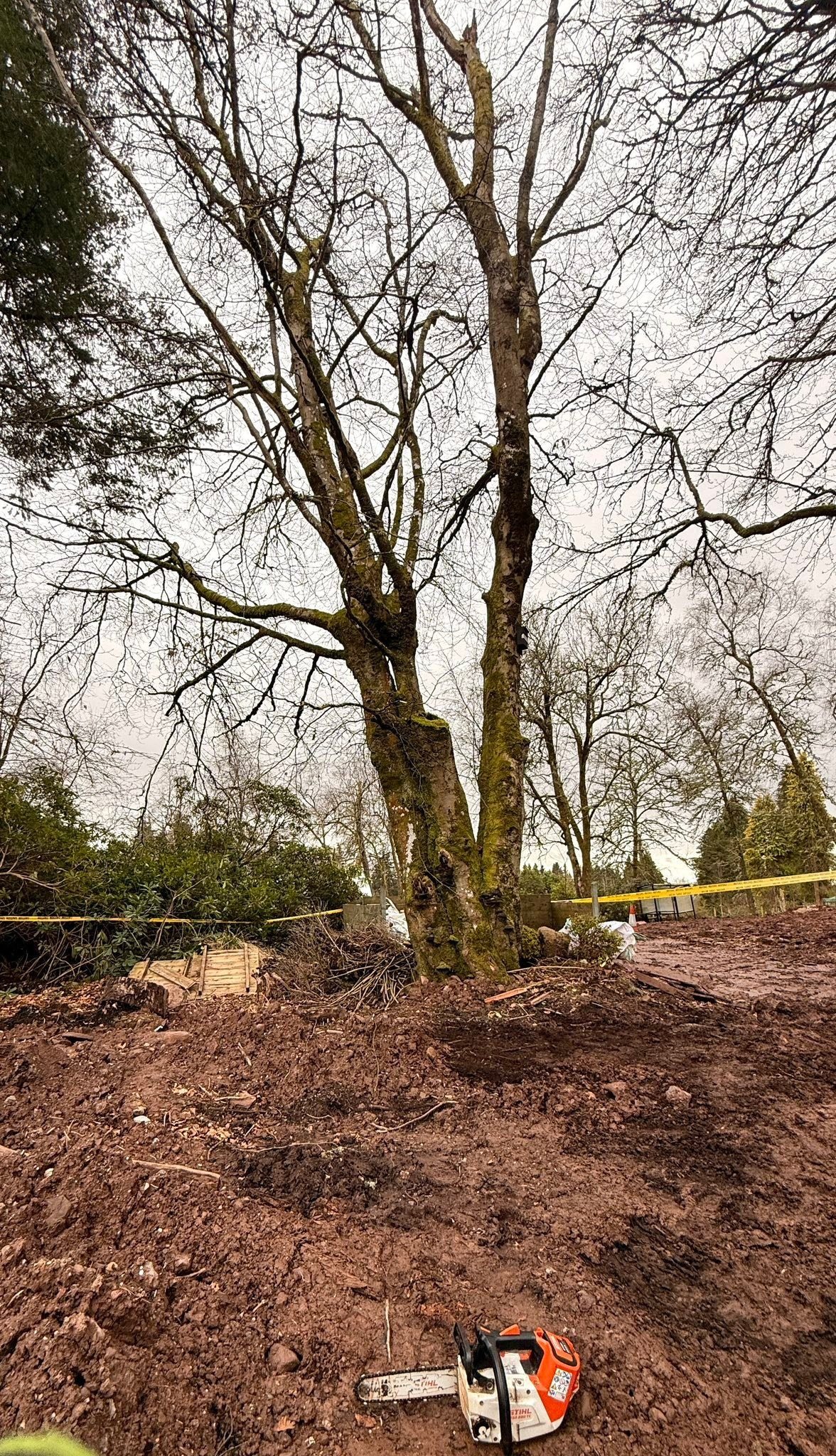
Ground works around the tree that had disturbed and weakened its root system
Bracket fungi are the fruiting bodies of fungi that rot a tree from the inside. The RHS explains that by the time a bracket appears there will usually have been extensive heartwood decay, and that these fungi usually lead to weakening and sometimes to the tree breaking or falling. That is why brackets on a stem should never be ignored.
Bracket fungi marked in yellow along the stem, and the bat box location in red.
The cross-section once the stem was cut: the decay had spread a long way through the wood.
The tree before work, with the ground around its base already dug up.
Roots and stability
Why ground works near a tree matter
A tree stands on two things: the strength of its stem and the grip of its roots. When decay weakens the stem and the roots are disturbed at the same time, the risk of failure goes up, often with no obvious warning signs, and especially in high winds.
A lot of the tree failures we deal with come after digging or landscaping, soil being moved or compacted, or other changes around the base of the tree. If you have had any of that done near a tree recently, have the tree checked.
Wildlife
Relocating the bat box before the removal
The bat box on this tree was safely relocated before the removal began. That matters, because NatureScot points out that all bat species in Scotland use trees as roosts, that roosts are usually hard to see, and that it is crucial to be sure there are no bat roosts in a tree before it is felled, cut or lopped.
The removal
Taking the tree down in sections
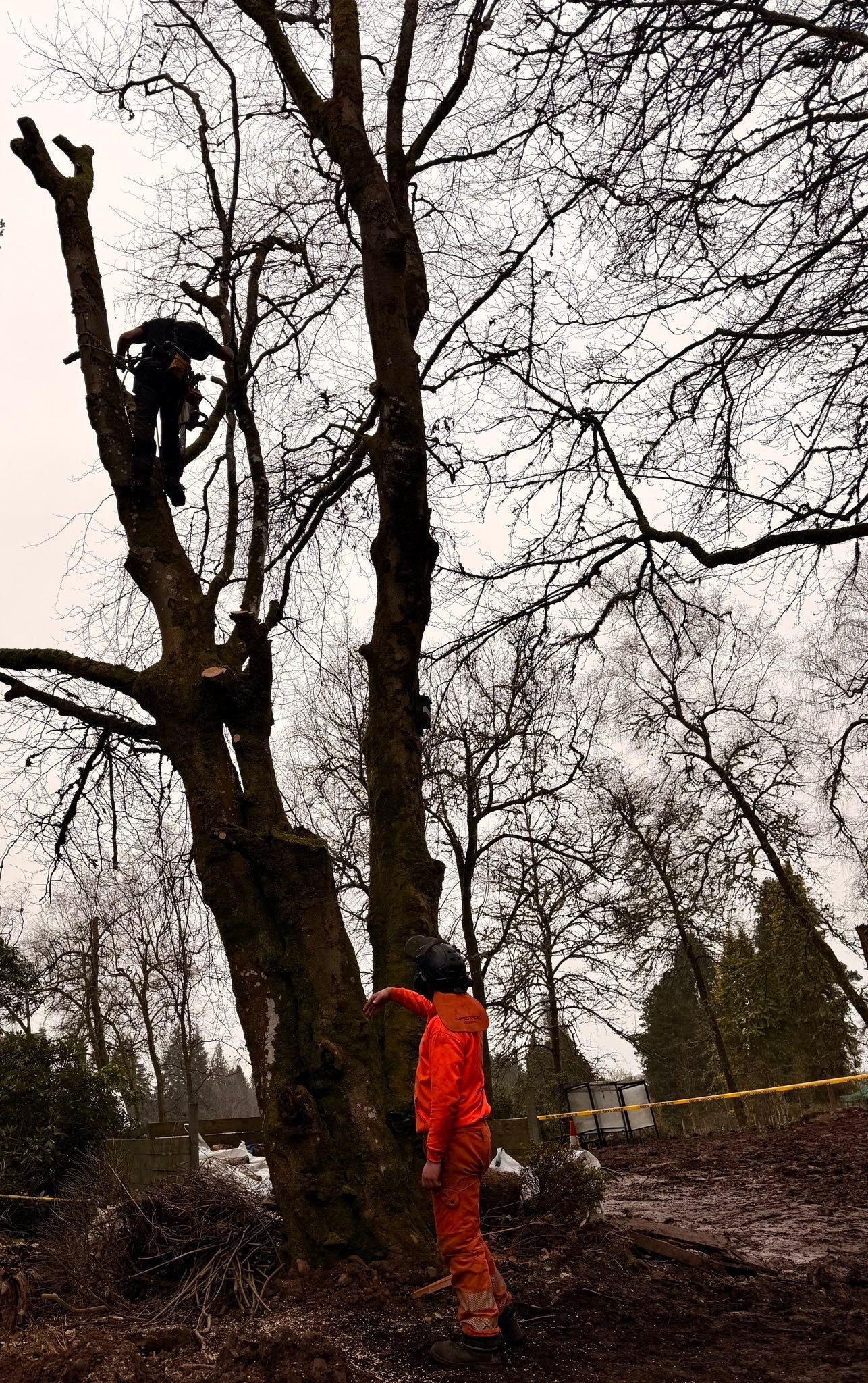
With ground works still going on around it, we dismantled the tree in sections using controlled techniques and managed the surrounding area carefully as we worked. Then we completed the full removal and cleared the site.
Climbing the tree to take it down section by section.
The tree down to the stump, with the timber cut and stacked.
Before you book
Tree preservation orders and conservation areas in Dunblane
Dunblane sits in the Stirling Council area. Stirling Council is clear that if a tree preservation order is in place you must get its permission to cut down, top, lop or uproot a tree, that the same applies to trees in a conservation area, and that doing the work without consent can bring a significant fine. Check both with the council before any work is booked.
Free assessment
A free assessment for your trees in Dunblane
If you have had ground works or landscaping done near a tree, or you can see brackets on the stem, have it looked at before the next spell of high winds. We carry out tree felling and removals like this one across Dunblane, Stirling and Bridge of Allan, with £5M public liability insurance on every job. For a free, no-pressure assessment, contact us or call 07599 008809.
Got a tree that needs seeing to? Let's have a look.