Willow tree reduction in Stirling city centre usually means working in a tight spot, and this one was as tight as they come. The job was a mature willow in a walled courtyard garden behind a row of old stone flats in the centre of Stirling, grown to around ten or eleven metres and pressing in on the windows and the cables around it. We climbed it and brought it down to a low framework in sections, so that nothing around it was touched and the tree can carry on as a smaller, managed pollard.
A willow reduction in a Stirling city centre courtyard
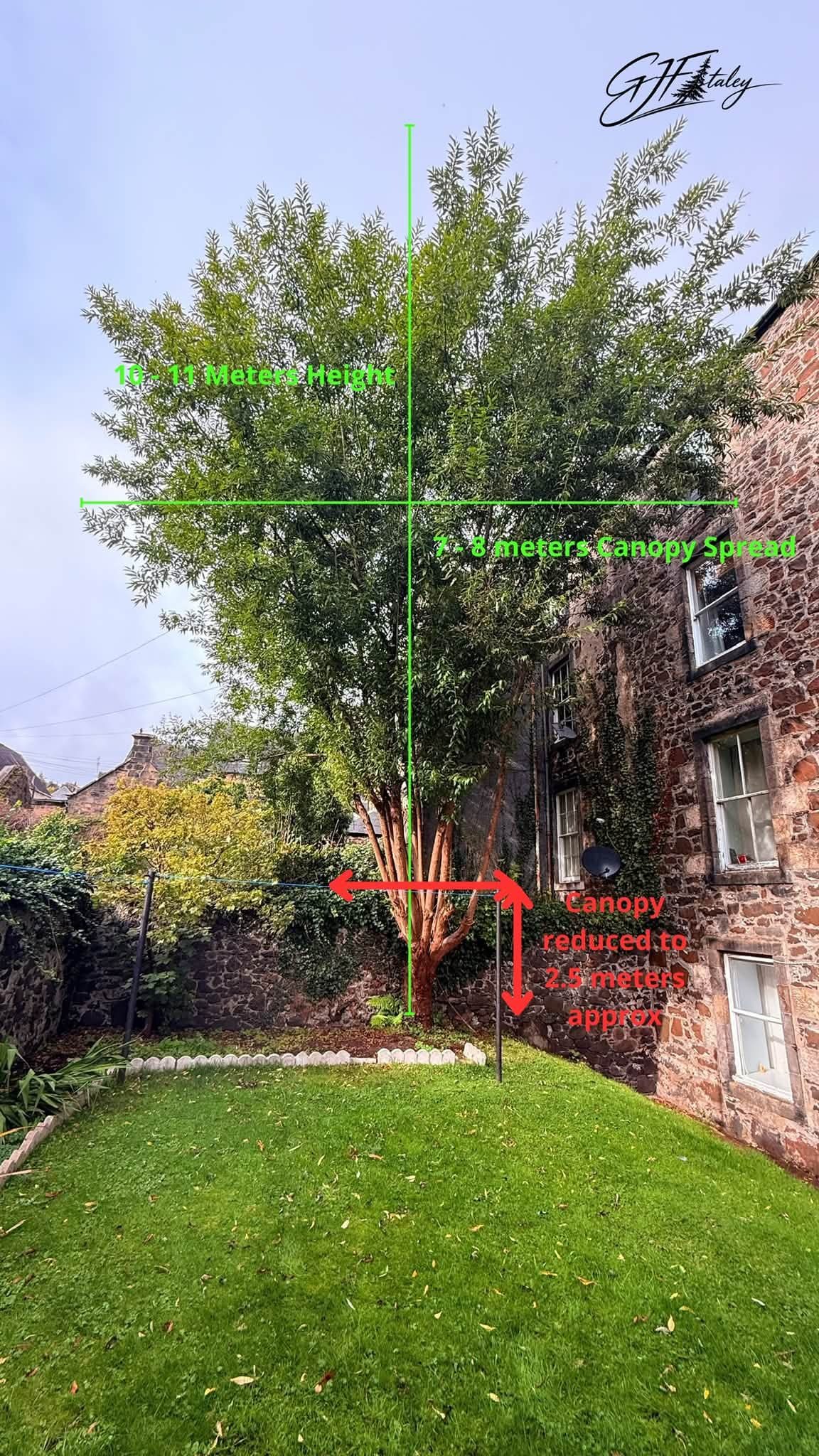
The courtyard sits behind a terrace of old stone flats, closed in by walls, the buildings and a run of telephone cables. In the middle of it stood a large multi-stemmed willow that had outgrown the space. From the lawn you could see the scale of it: we had the tree marked at ten to eleven metres tall with a canopy seven to eight metres across, throwing shade over the garden and pressing in towards the flats. A willow that size, hard against a building in a confined plot, only causes more trouble the longer it is left, so the plan was a hard reduction rather than removal, taking the crown back to a low framework the tree could grow from again. For a job like this we would talk an owner through the options first, as part of our crown reduction work.
The willow before work, with its height and spread marked and the reduction planned to about 2.5 metres.
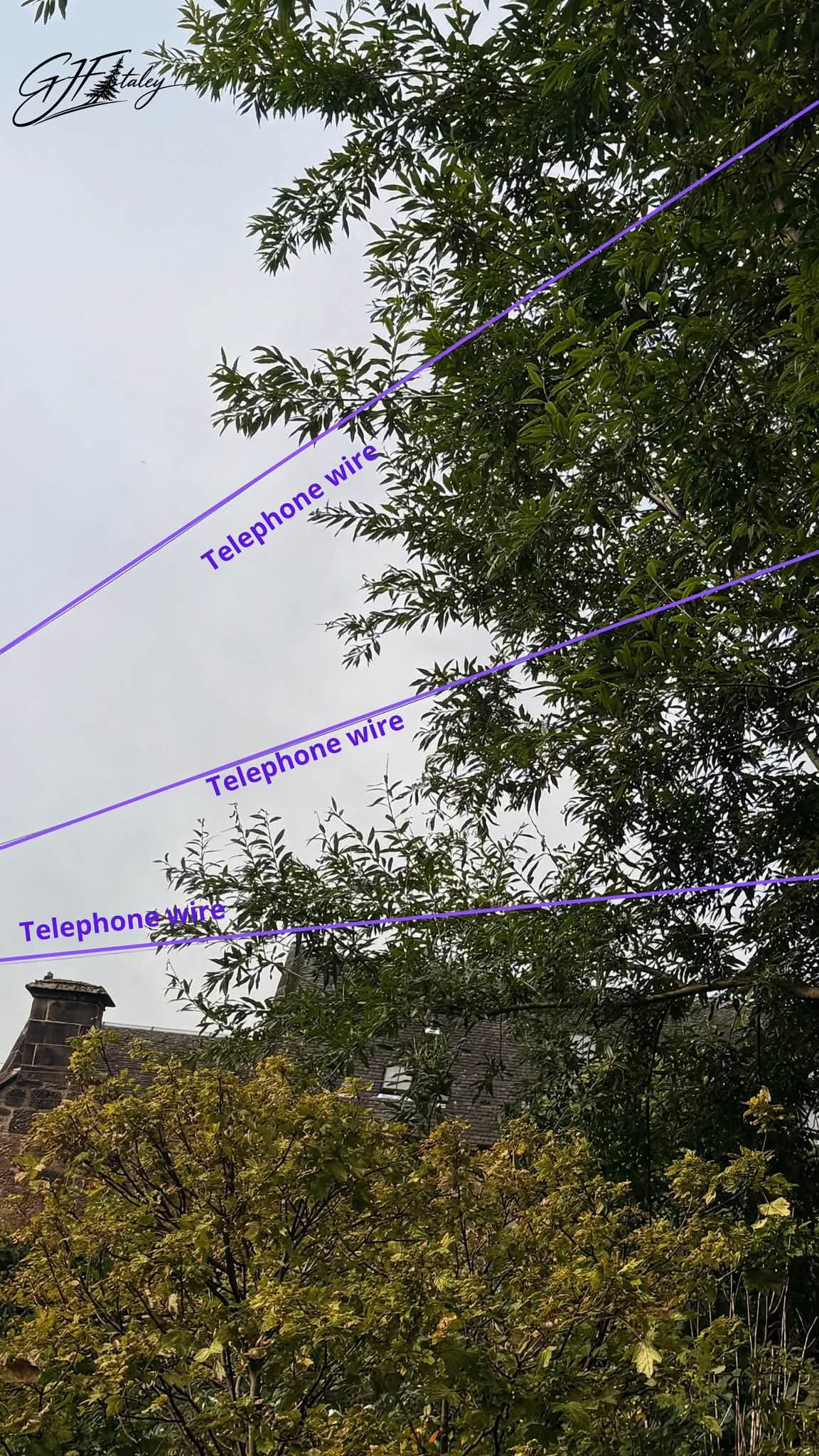
Telephone cables ran through the crown, so every branch had to come out around them.
The tight part
Five telephone cables threaded through the crown
What made this one exacting was everything around the tree. Five telephone cables ran straight through and across the canopy, with residential windows, satellite dishes and the stone wall of the flats only feet away. Access in was through a narrow close, so there was no room to drop timber and no clear ground to let anything fall. On a site like that, every move is planned. Every branch had to be cut small and lowered on a rope, worked out from between the cables and the glass rather than dropped, so the job was really a long run of small, controlled cuts.
How we did it
Climbing and rigging it down in sections
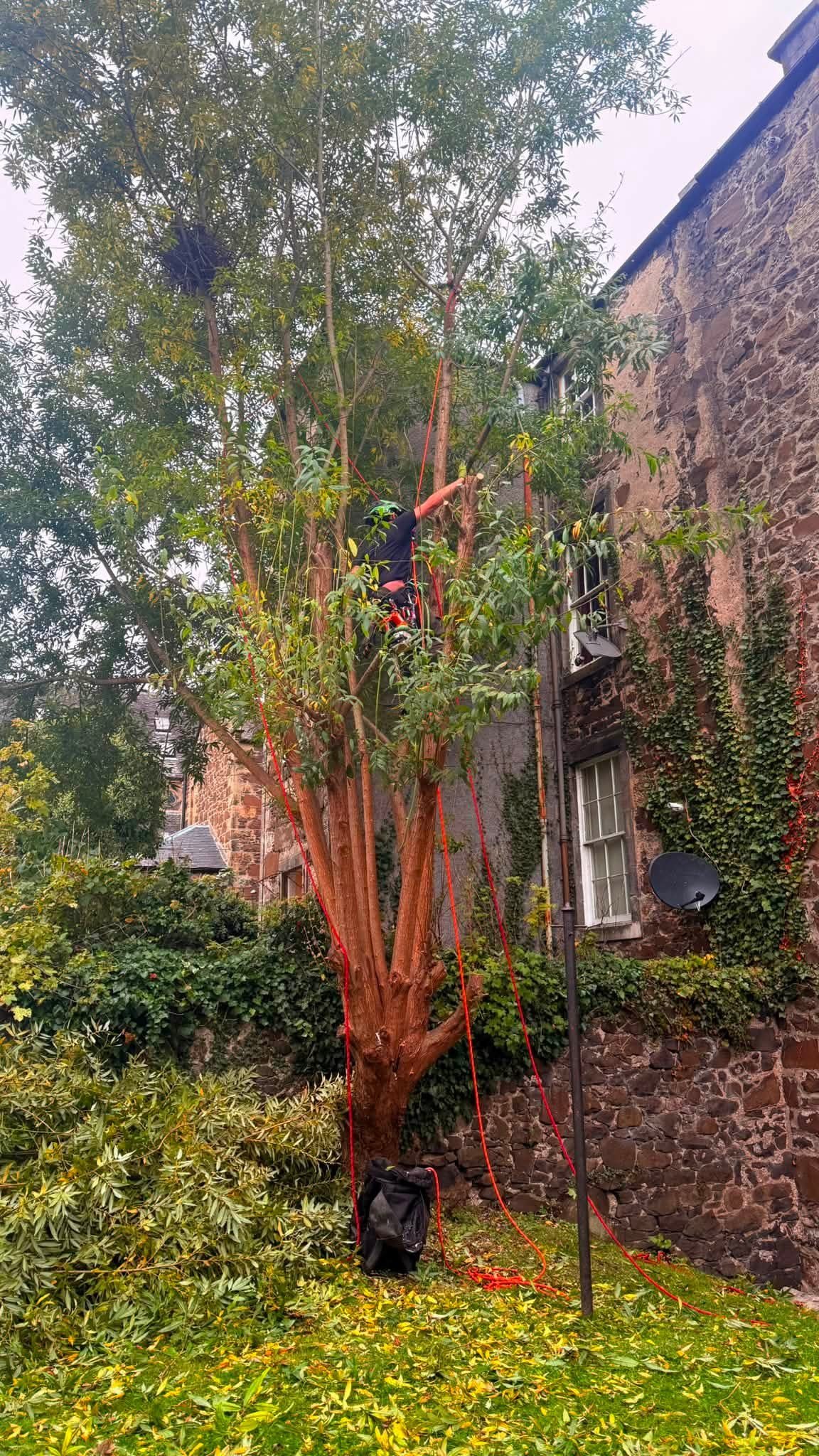
The whole reduction was done on rope from within the tree. One of our climbers went up and worked around the crown, taking the long upper stems down first and then the heavier wood lower down. Each piece was tied off and lowered under control into the small clear patch we had on the lawn, so the weight came down slowly and well away from the windows, the cables and the walls. Taking a tree apart in the air like this, on rope and under tension with a saw running, is demanding work that has to be kept under full control, and it calls for a trained climbing team with the proper ropes and rigging gear.
Each section was roped and lowered under control, clear of the windows, cables and walls below.
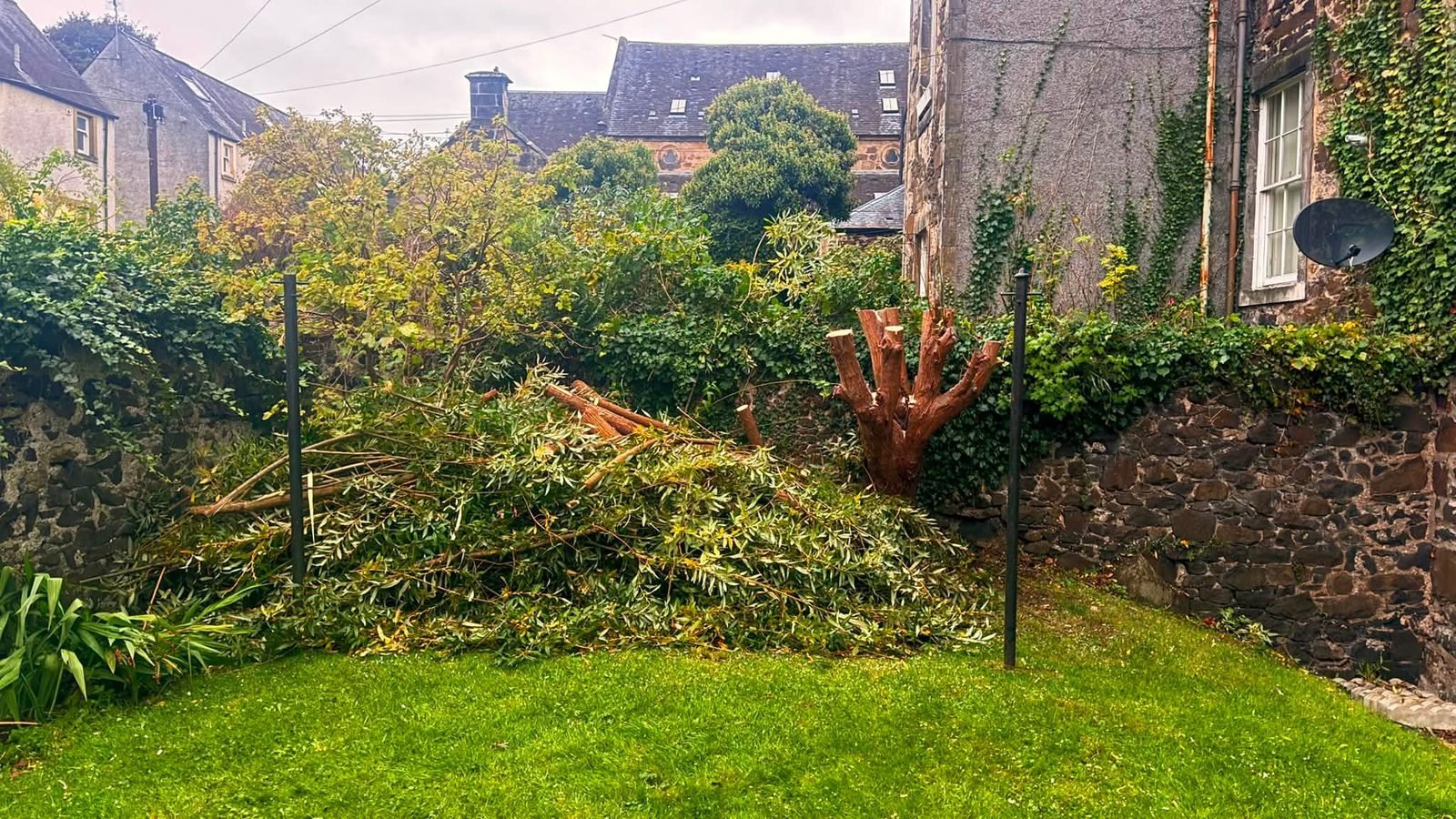
The willow left at about two and a half metres, with the brash stacked on the lawn for the owner to use.
What we left
A low pollard the willow can grow back from
We did not take the willow out altogether. Instead we reduced it hard and left the main stems standing at about two and a half metres, setting it up as a pollard. The Royal Horticultural Society notes that a willow that has outgrown its space can be pruned or pollarded, and that this kind of pruning is done from autumn through to early spring, which is why the work suited the time of year. Cut in autumn, the tree sits over winter and pushes fresh growth the following season, this time as a smaller, denser head that is far easier to keep in check with a light cut every year or two. At the owner’s request we left all the timber on site: the bigger wood stacked for firewood and the lighter branches to be chipped for the beds, so nothing had to be carried out through the close.
The local rules
Tree work in a conservation area
There is a legal check to make before a reduction like this in a street of old stone buildings. If the tree is covered by a Tree Preservation Order, or it stands within a conservation area, Stirling Council has to be told before any work starts. The council is clear that it is an offence to carry out work on a protected tree without its consent, and trees in a conservation area are controlled in the same way. Knowing which of these covers a particular garden, and working inside it, is part of the job here long before the ropes go up.
If a tree is crowding a tight space
If you have a tree that has got too big for a small or awkward garden, pressing on a building, a wall or the lines around it, it is worth having someone look at it before it forces the decision for you. A hard crown reduction can often bring a tree back to a sensible size and hold it there, so it does not have to come down at all. We work across Stirling and the wider central Scotland area, we carry five million pounds of public liability insurance on every job, and the quote is free with no pressure to go ahead. You can reach us through our contact page or call us on 07599 008809.
Got a tree that needs seeing to? Let's have a look.